Know what every request cost
What each request records
| Field | Example |
|---|---|
| Model asked for | auto |
| Model and provider that answered | claude-haiku-5-5 on Anthropic |
| Input and output tokens | 1,840 in, 212 out (cached and cache-write tokens counted separately) |
| Cost | $0.000290 |
| Time to first token, total time | 410 ms, 1.9 s |
| Attempts | Each provider tried, with its status and time |
| Source | The tool that sent it, from the X-Source or X-Title header |
The prompt and answer are kept only if your organisation turns on retention.
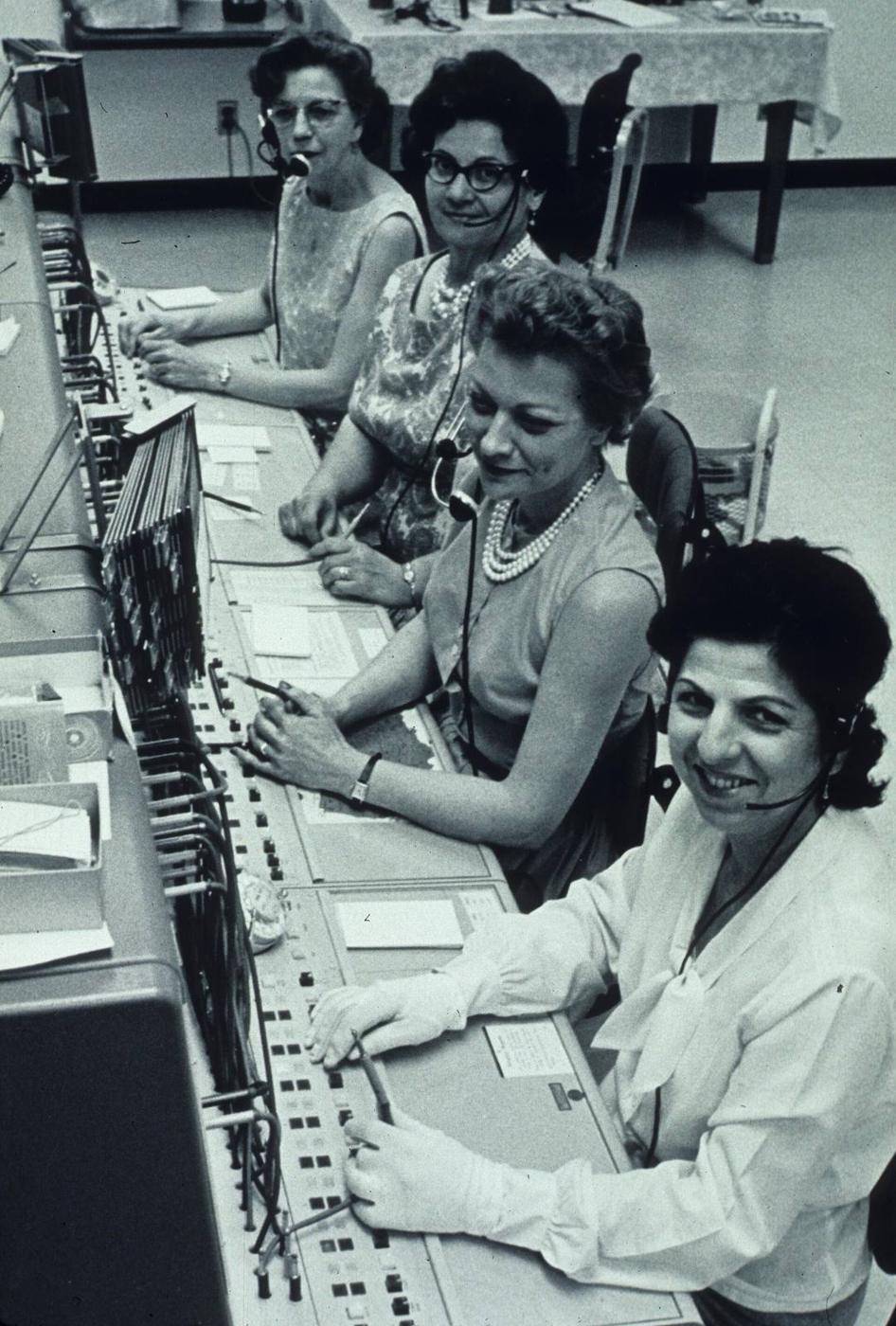
In 1953 an operator put each call through by hand. DigitSpace routes every request.
Switchboard operators, NIH Clinical Center, 1953. NIH History Office, public domain, via Wikimedia Commons.
Where spend shows up
- Activity
- Every request, newest first, with its cost and details.
- Usage
- Spend over time by model, provider, key and project.
- Members and teams
- What each person and team has spent, against their budget.
- The API
- GET /v1/key returns the calling key's usage, so a script can check its own spend.
Prices you can check
Each request is priced from the model's published price per million tokens at the moment it ran, and the models page lists those prices. Credits are charged at that price; requests on your own provider keys are free on DigitSpace and billed by the provider.
Questions


Is the cost exact?
It uses the provider's token counts and the published price. If a stream breaks off before the provider reports usage, the request is charged on an estimate, and the log says so.
Can I set limits as well as see spend?
Yes, with budgets per key, member and team. See budgets and access.
How long are logs kept?
Request metadata is kept for your usage history. The prompt and answer are only stored if you turn retention on.
Read next
Live in a minute.
Create a key, change the base URL, send a request. No card needed with your own provider keys.
Start free